
After four years of trying, I‘ve succeeded in obtaining a permanent academic position with the CNRS in France. I will be stationed at the LISA (Laboratoire Inter-universitaire des Systemes Atmospheriques) laboratory where I have been working as a postdoc for two years now. I essentially have the freedom to do basically whatever I want and have a pretty firm autonomous grip on my career trajectory.
That‘s all well and good. But then, do I still exist as the Cosmic Chemist, or the fledling scientist who just wanted to uncover the mysteries of the cosmic origins of life by shooting light beams at stuff and things?
I guess the key word here is “fledling”. At what point do I fly? Am I flying already? Wasn‘t I flying when I won a Marie Curie Individual Fellowship in 2019? Am I flying now even though I haven‘t obtained the necessary funding to build the laser experiment I want to set up at LISA? Am I flying because my number of publications has reached my numerical age? Is there an h-index for academic flight? Have I uncovered the mysteries of the cosmic origins of life? This is the problem when you are responsible for developing your own metrics for success and failure.
A key component here is how I feel. Do I feel like I am flying? Yes. Why? Because I am doing things I want to do. What would I change at the moment? Bigger paycheck? Have more publications? Have more research funding? Have a larger international colllaborational network? Yes. And that means that what I would change is basically everything I am actively working on. What I want is that I’d be a little further along with my ongoing activities?
That‘s not bad, honestly. What if the metric for academic flight is being in the position where what you would change is acually what you‘re currently working on? I quite like that, honestly. It is irrespective of where you are in your career. It is irrespective of arbitrary achievements like awards, numbers of citations, patents, invited talks, etc.
In that sense. I am flying. And I have been flying for a while.
Should I remove the “fledling” from my Cosmic Chemist subtitle? I think so, yes. But not because I am now a CNRS researcher. I have felt like I have been an actual proper scientist for a while now. I used to suffer from a pretty heavy bout of imposter syndrome, but I can‘t say it is negatively affecting me anymore. I am confident in what I know and what I don‘t know. I know what I can do easily and what I can do if I push myself. I also know what would be best to delegate or outsource to others.
Okay, okay, okay, none of this is actually what I wanted to originally write about.
The year 2024 has profoundly changed me. At the very end of 2023 I wrote about how I got inspired to reflect on my career after watching the horror film Midsommar. Funnily enough, I just re-watched another horror classic, The Babadook, which has now inspired me to more actively process my grief. Strangely, what now upon reflection seems like a disturbing omen, the day after my blog reflecting on my academic career, the field of astrochemistry lost one of its leading figures, Prof. Harold Linnartz.
Harold was my supervisor for three years during my Marie Curie fellowship at the Leiden Observatory in the Netherlands. But he had been a father figure to me for much longer. I sent him an email in January 2015 while I was a PhD student at the University of Iceland (little before starting this blog) asking if he had any postdoc availabilities in his group. He introduced me to the Marie Curie fellowships as well as the VENI fellowships in the Netherlands that I could apply for. Not only that, he invited me to fly to the Netherlands and visit the group during the summer of 2015.
My PhD group was pretty small. Apart from my supervisor, there was a technician and one more PhD student. At the Laboratory for astrophysics, there were about a dozen PhDs and postdocs, technical staff, etc., and it was perfectly located at an actual observatory where the laboratory results could be easily disseminated amongst the astronomers who needed that data. Visiting this place as someone coming from, ehemm, let‘s say humble beginnings, it blew my mind. This seemed like a fever dream to me who wanted nothing more than to do astrochemistry research. There wasn‘t just a single experimental setup, there were ten of them. Each one uniquely equipped to tackle particular blind spots in astrochemistry whether related to spectroscopy, dynamics, or both, in both gases and ices.
Harold and I got along pretty well, and we settled on focusing of the i-POP setup which I have written about here before. In a memorial symposium dedicated to Harold, held in April in Leiden, I jokingly noted that this was how Harold’s arguably least successful collaboration ever got started. I applied for the Marie Curie fellowships in 2015 and 2016 and got rejected both times. I applied for the VENI fellowships in the chemistry panel in 2016 and got rejected. Then in the astronomy panel in 2017 and got rejected. When I finally got my fellowship in 2019 the very first publication that I wrote with Harold I submitted to the Astrophysical Journal and only a few days later got a rejection along with the meanest and least constructive review I have ever experienced.
Then, the covid pandemic hit us and we were forced to only allow three people in the laboratory at a time which meant that a maximum of three experiments could be run at any given moment. I can’t say that I throughout all of this I learned to be persistent, I already was, which I think is among the reasons why Harold liked working with me.
However, I was just one of Harold‘s postdocs. He supervised a long list of postdocs, PhD students, and master students, many of which are today permanent researchers at distinguished institutions and universities all over the world. He was among the most even-tempered people I‘ve ever met. He led by example. His hard work was boundless. His light and optimism shone brightest in the darkest of times. After I got rejected from the CNRS in 2022, I felt devastated because I had worked my butt off to impress the panel during the interview. After the result, I shared with him that I had my doubts about continuing an academic career and in his ridiculously hectic schedule he prioritized sitting down with me to give me solace and some of the best advice I have ever received.
I was trying to weigh the pros and cons of staying and leaving the academic environment to try to find a job in some industry related to my expertise. He told me that it‘s not really a question about making the right decision. It‘s about making a decision, and then putting in the work to make it the right one.
I was floored. The next year I redoubled my efforts for my CNRS interview. I was ranked just below the cut-off. But I was ranked. A step in the right direction. I only got positive feedback. So, I pushed again harder and here we are. Ranked first.
I‘m sad I couldn‘t share my success with Harold. I often think about him and the advice he would give me on this and that. He always encouraged me to express myself and gave me the floor to speak. He might be the most proficient active listener I‘ve met. He emblematized that the best teachers don‘t tell you what to find, but where to look. He taught me the value of clarity in writing, speech, and expression. I‘m happy I asked him all the questions I did about bureaucracy, admin, time-management, politics in science and science policy, working with people, etc., because I learned so much from him,
So, what the hell does The Babadook have to do with any this?
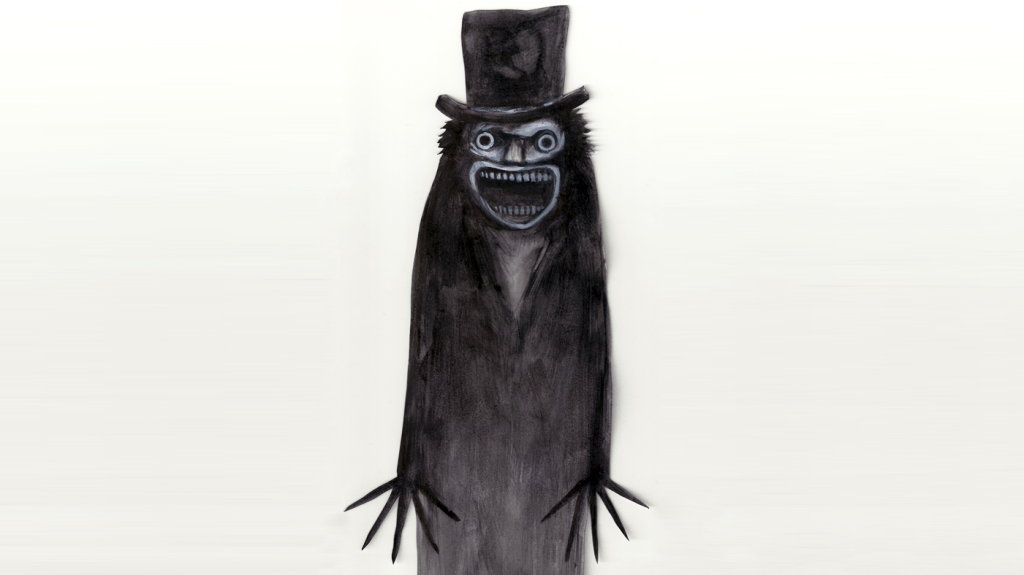
Bear with me. [spoilers ahead] The Babadook is about a single mother whose husband was killed on the way to the hospital where she gave birth to her son. The son has a wild imagination, and they stumble upon a book about a creature called The Babadook that basically promises to eat them alive and leaves them both freaked out and petrified. Before too long the boy starts seeing The Babadook and the mother as well and you start questioning whether it is actually inhabiting her in destructive ways threatening to kill her son. This psychological thriller is, however, a vessel for how grief manifests in us. If we allow grief to fester and not confront and deal with it, it can destroy us and everything we love. Ultimately, grief can have a place in our lives, but we have a responsibility to keeping it reined so it doesn‘t hurt us or the people we love.
Watching it last week, I became unsure whether I have dealt with all the grief in my heart that I felt for Harold‘s untimely passing. For the past couple of months, I have also been working against the clock to finalize manuscripts to submit to a special issue in ACS Earth and Space Chemistry that is dedicated to him. He has been on my mind in all the work I have been doing and as a result, it may have been negatively impacting it. Another of my closest mentors noted he was surprised that the manuscript draft I sent didn‘t seem like my usual high-quality writing. It appears I‘ve been trying to get it over with it instead of paying it the due diligence it deserves simply because it‘s reminiscent of the hurt. The emptiness left by his passing. The regret of not having his support anymore. I would never have guessed that losing a mentor could feel so harsh and unforgiving.
But now here we are. I have reached the level of a permanent researcher and I couldn‘t share it with Harold. And the first thing I‘m doing is finish manuscripts I would have co-written with him. It might seem childish but it reminds me of being pushed on a swing as a kid by a parent. Soaring higher and higher until you take a leap and jump further than you‘ve ever jumped or even imagined you could have jumped. Only to look back and the parent pushing you isn‘t there anymore.
But it is okay. Losing one mentor that meant the world to you is hard. But I am also extraordinarily fortunate to have several other mentors in my life that have also pushed me higher and higher. And this is something The Babadook reminded me of. I am responsible for my grief. And not letting it taint the beautiful relationships, both personal and professional, that I am truly blessed for having in my life.
To me, writing this piece is one way of reminding me that the grief won‘t necessarily go away. And it is important to keep holding on to its reins, keeping it bridled, so it doesn‘t grow and fester to defile that which I am so blessed with.
The year 2024 has changed me. I can‘t say that I‘m stronger or better for it. I‘ve achieved success and whatnot along with grieving someone who was important to me. I‘m now going into an incredibly hectic work period and I‘m reminded of Harold‘s work ethic and responsibility. He‘d want me to show up and do my best, take responsibility and show accountability. Do my best while I‘m here. Memento Mori.
 The Cosmic Chemist